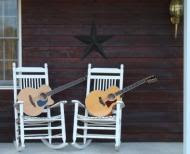
It's the last thing Jesus said to us, before he flew back home.
Acts 1:8
"But you will receive power when the Holy Spirit comes on you; and you will be my witnesses in Jerusalem, and in all Judea and Samaria, and to the ends of the earth."
I like what he said, and I've been doing a lot of thinking about how to carry it out. He's asking us to be witnesses. Notice how he doesn't ask us to be judges. For some reason, we like to get those two mixed up. Time to focus on being a witness - in my neighborhood, and beyond.
What is a witness?
So what does it mean to be a witness? A witness does more than just observe. A witness also testifies. A witness sits in the witness box, waiting for the right time to tell her story.
A witness has to get his story together, sort things out, get them in order, and be ready to share. A witness has to tell his own story, anything else is hearsay. It's OK to talk about yourself, to tell your own story.
I have many stories to tell and I love to tell them, when the time is right.
I am the mother of a brilliant college student. My story had a tough beginning, including the time when doctors told us our child wouldn't learn to talk or return our love. This story has such a happy ending now that I love to tell the story. It's a story of hard work, desperate searching, a mom's blind faith, and a boy's courage.
I am the wife for 23 years of a talented musician and entrepreneur. Our story has many tough chapters. We have been through things that have lead other couples to divorce court, even to commit murder. Yet our story has a happy ending now and I love to tell the story. Our story is about commitment, forgiveness, loving and letting God do the loving for me when I had no love of my own to give.
I am a worship leader to whom God gave a vision long before he gave me a job. The journey takes me on a path straight through churches that had issues with women in leadership, issues with musicians who also performed in the secular world, and issues about doctrinal uniformity. Still, this is a happy story and I love to tell it as it twists and turns. My spiritual odyssey takes me down interesting paths, into strange and wonderful places, and introduces me to the most amazing traveling companions.
So what is your story? Jesus asks us to tell our stories and to be witnesses. Tell the tough stories. Tell the happy stories. Tell all the stories when the time is right.
Be a witness, not a judge. Don't tear down the stories of other witnesses by judging them. Share your own story, your experience, strength and hope. Listen to others as they tell their own stories. Compare notes, laugh and dream. Tell your story.
So, what's your story?
Saturday, February 5, 2011

Monday, July 26, 2010
Man in the Middle, Mom on the Sidelines

It is July 24th and I've been looking forward to this moment since the blizzard back in February. I've just sung two of my favorite songs, played bass like a man, and my husband, two microphones away, is about to sing a big crowd pleaser, "The Man in the Middle." The band is hot (I'm so lucky to be playing with these guys), the summer breeze is cool, the sound crew is skilled, the folks at Morgan Arts Council are wonderful. This is a terrific day and a terrific moment to be here and now.
And then in a flash of chance and gravity, things go horribly wrong.
I look up from the stage and see my son, Jim Dill, in horrible pain, and bleeding profusely from a gash in his shin.
A million thoughts and impulses fly through my head like a freight train. My heart leaps out of my chest, across the canal, and into the gaping wound. How did things go so bad so fast?
OK, let's go back in time.
It's February 2010. I'm snowed-in in what will be known as the Snowpocalypse. The phone rings and it's Gordon Macleod from the Morgan Arts Council. He says they want the Dill Pickers to play in their summer concert series. My friend Lynn Greer has helped us get this gig by hand carrying our press kit and I'm so happy for her support. Now, they say they like our sound and we discuss the business end (I'm terrible at this) and schedules and money and such. I grab my laptop and email the other pickers, who are as excited as I am. This is gonna be a great summer.Fast forward a month or two and add the much prayed for springtime thaw. I'm cyber-chatting with my good buddy Ron Furgerson. Ron has been a Dill Picker supporter from the beginning and has even used our music in some of his youTube videos. Ron would really really really like to have a video of us performing "The Man in the Middle." I would, too, and I think that maybe this summer's gig in Berkeley Springs will be a great time to film it.
And that's how it happened.
At the gig, Jim was hired to be videographer and photographer. He was using my camera to take some stills and some video. I had asked him to be sure to get "The Man in the Middle" on video. Jim was not expecting to have to be filming so early in the set and was nowhere close to the stage when I asked him publicly and into the mic to start the video. Jim's a good photographer and he takes his job seriously so he rushed back to the stage to catch the song from the beginning. And he almost got it, too.But on the way, he had to cross the stone waterway. One leg makes it, the other leg slams shin first into the edge of the stone retaining wall. *Expletive*
And we got the aftermath on video, because even badly hurt, Jim does what he says he will do. So as the camera runs, you can hear Jim react to the fall, the blood, the wound, and the feeling that his leg may be broken. The video is very hard to watch. For the first 10 seconds, Jim is breathing heavily and groaning in pain. And yet, somehow he continues to hold the camera and continue with the video. At 0:55, he says calmly "That was a mistake." At 1:38, someone off camera comes to help and offers to bring some ice. At 2:14, the folks getting ice alert the wonderful Dr. Matt. Yes, there's a doctor in the house. Hallelujah. The ice arrives at 2:24 and Jim asks for medical attention, initially asking for an ambulance, but getting a better solution with Dr. Matt just a few feet away. Dr. Matt and my friend Kathryn Rack arrive at 3:00, one to check out the situation and then retrieve his black bag, and the other to check out the situation and offer help with the video camera. At 3:30, Jim utters the understatement "I tried to jump the gap."
From 3:30 on, the video looks normal. Kat frames the band, even getting happy footage of the dancing girl on the front row.
Looks normal from the outside, but I know what's happening on the inside. My child is in terrible pain, maybe even terrible danger, and my heart is breaking with worry and guilt. But on the tape, I look fine, sing fine, play fine. You can't tell what's going on inside me. I suppose that's a good thing.
At 4:40, before the song is over, I turn to Frank and ask him to talk for 30 seconds so I can run off stage and check it out. I drop my bass and scurry off to see about Jim. By that time, Dr. Matt is in motion, Jim has shown that he can walk on the leg, and I'm a little bit calmer. Frank is wonderful, chatting happily with the crowd about anything and everything. I'm back on stage a few seconds after that and the show must go on.
Now that it's over, a few words of heart-felt thanks.
Now that it's over and the gig still went well, now that we know that Jim's leg is not broken and he didn't need stitches or an ambulance ride or a tetanus shot, now that we got that Berkeley Springs crowd to dance a little in the 99 degree heat, now is the time for me to express my gratitude to the folks who were so fabulous.Thanks to my fellow band members, Keith Dill and Jamie Leonard, and especially to Frank Nanna, for holding it together and covering for me while I freaked out inside. I definitely lost my mojo that day and these guys made it all fine with their amazing musical skills and supportive attitudes. Frank's banter while I ran off stage is just another example of what a great entertainer and improvisor he is. I am so lucky to be playing with you all.
Thanks to my friend Kat Rack, who was wearing a MOMS ROCK piece of flair, for stepping in to quietly fill in the mama role. You rock, indeed my friend. I don't think you had to do much, but seeing you there and knowing that you had your eye and your love on things is so greatly appreciated.
Thanks to the Morgan Arts Council for their support, in particular to Dr. Matt Hahn for answering "yes" to "Is there a doctor in the house?"
And thanks to all the kind folks who came out to the gig. We had so much fun and you guys make our work all play. You rock our worlds and we love you like nothing else. Thank you, thank you, thank you. Hope to see you again, maybe next year.
Saturday, July 3, 2010
Flying in a BGV Formation - I love harmony vocals!
This blog post is for all of you who love singing backup vocal, which we in the biz call BGV for BackGround Vocals.
I love singing with you guys. We fit together in a tightly controlled and yet totally organic formation, like a flock of geese flying in a V. Our lead vocalist goes up, we go up. Our lead vocalist goes down, we go down. Our lead vocalist crescendos (that's fancy music talk for getting louder), we crescendo. Our lead vocalist decrescendos, we back off slightly, too, staying just a hair behind so that the lead is still out in front, in the point position of the V formation. It's magic and yet it's reproducible, both an art and a science.
So let's teach the others how to fly along with us. Feel free to add comments if I miss anything. I'd love to grow our numbers because well-sung harmonies are so rare and so wonderful.
In soccer and basketball, each player has a zone. You get in your zone and you stay in your zone. If you go into another player's zone two bad things happen: nobody is now in your zone (say, right forward) and your team now has 2 players in another zone.
In singing harmony, finding and staying in your zone is also important. For example, if your job is to sing just a little higher than the melody or lead (we call this position the "tenor" position) then you should find your position and stay there. Don't venture lower, either into the melody/lead position or farther down into the "baritone" position. Don't venture higher, up into the "high baritone" position a full 5th above the melody. There are already players in those positions, so you'll color that position too darkly and worse, nobody is singing tenor now.
Find your zone. Embrace your zone. We need you there. We sound full and warm with all of us in our zones.
As far as volume goes, much of this is up to our sound techs. Pray for them, that God will guide their fingers and open their ears. I mean, we gotta all hear each other or this thing doesn't work. So we all need to be strong in the monitors, if we're going electric. And never underestimate the power of a good compressor to balance and shape the vocals. If we're going acoustic, we need to stand close together, so everyone is within earshot, even if the banjo is banjo-loud.
Now timing is an art, almost a psychic connection. We all need to make our attacks (fancy musical term that means how we start the note) and decays in formation. Us BGVs need to be just a nanosecond behind the lead on the attack, and just a smidgen ahead in the decay. This way, the melody/lead is the first and last thing heard in the vocal blend. This letting go of the note in submission to the leader's lead is hard for us diva types. We love to embrace that note and hold it for all it's worth. Resist this impulse, it's of the devil.
When the leader makes a big leap, you need to make a big leap, too. If you don't make an equally big leap, you'll be doubling somebody else's part, either your other BGV team mate, or the melody, making that part too dark and leaving a big hole where your part should be in the blend. So make that leap. Whee, it's musical bungee fun!
Now, let me take just a moment to rant about counter-melody. Don't do it. Don't even think about it. Counter-melody is similar to harmony because it's something that fits in the chord and is not the melody. But it's not harmony. Counter-melody draws attention to itself. It says "Hey, I'm singing over here. Look at me!" and draws attention away from the melody, messing up the nice warm blend of a tightly flying harmony. If you want to sing out front, sing the melody role for goodness sake. Then you can be the goose out front for all the world to see and admire. I hope I've made my point. Counter-melody, like refusing to decay in time, is of the devil.
Please join us. We'd love to sing with you!
I love singing with you guys. We fit together in a tightly controlled and yet totally organic formation, like a flock of geese flying in a V. Our lead vocalist goes up, we go up. Our lead vocalist goes down, we go down. Our lead vocalist crescendos (that's fancy music talk for getting louder), we crescendo. Our lead vocalist decrescendos, we back off slightly, too, staying just a hair behind so that the lead is still out in front, in the point position of the V formation. It's magic and yet it's reproducible, both an art and a science.
So let's teach the others how to fly along with us. Feel free to add comments if I miss anything. I'd love to grow our numbers because well-sung harmonies are so rare and so wonderful.
Flying in your zone, it's like soccer or basketball
So if you don't like the flying geese analogy, let's look at the zone analogy.In soccer and basketball, each player has a zone. You get in your zone and you stay in your zone. If you go into another player's zone two bad things happen: nobody is now in your zone (say, right forward) and your team now has 2 players in another zone.
In singing harmony, finding and staying in your zone is also important. For example, if your job is to sing just a little higher than the melody or lead (we call this position the "tenor" position) then you should find your position and stay there. Don't venture lower, either into the melody/lead position or farther down into the "baritone" position. Don't venture higher, up into the "high baritone" position a full 5th above the melody. There are already players in those positions, so you'll color that position too darkly and worse, nobody is singing tenor now.
Find your zone. Embrace your zone. We need you there. We sound full and warm with all of us in our zones.
Flying slightly behind the leader
This concept is easy to explain. We need the melody to be prominent, easy to pick out and recognize. So we BGVs stay just a little behind, both in volume and in timing.As far as volume goes, much of this is up to our sound techs. Pray for them, that God will guide their fingers and open their ears. I mean, we gotta all hear each other or this thing doesn't work. So we all need to be strong in the monitors, if we're going electric. And never underestimate the power of a good compressor to balance and shape the vocals. If we're going acoustic, we need to stand close together, so everyone is within earshot, even if the banjo is banjo-loud.
Now timing is an art, almost a psychic connection. We all need to make our attacks (fancy musical term that means how we start the note) and decays in formation. Us BGVs need to be just a nanosecond behind the lead on the attack, and just a smidgen ahead in the decay. This way, the melody/lead is the first and last thing heard in the vocal blend. This letting go of the note in submission to the leader's lead is hard for us diva types. We love to embrace that note and hold it for all it's worth. Resist this impulse, it's of the devil.
Flying with the leader
Here's the last little instruction: follow the leader. If the leader goes up a small interval (fancy musical term for the number of pitches between notes in a passage), then we go up a small interval, staying within the chord and holding our positions. If the leader goes up a large interval, then we also go up a large interval, not a small one, not holding the same note we just embraced.When the leader makes a big leap, you need to make a big leap, too. If you don't make an equally big leap, you'll be doubling somebody else's part, either your other BGV team mate, or the melody, making that part too dark and leaving a big hole where your part should be in the blend. So make that leap. Whee, it's musical bungee fun!
Now, let me take just a moment to rant about counter-melody. Don't do it. Don't even think about it. Counter-melody is similar to harmony because it's something that fits in the chord and is not the melody. But it's not harmony. Counter-melody draws attention to itself. It says "Hey, I'm singing over here. Look at me!" and draws attention away from the melody, messing up the nice warm blend of a tightly flying harmony. If you want to sing out front, sing the melody role for goodness sake. Then you can be the goose out front for all the world to see and admire. I hope I've made my point. Counter-melody, like refusing to decay in time, is of the devil.
Harmony Evangelism
So there you have it. My small bit of musical evangelism. Singing harmony is for anybody who can sing. It's simple but it's not easy. But you can do it. I believe in you.Please join us. We'd love to sing with you!
Monday, June 21, 2010
Tribute to My Parents - Part Four - Mom the Great Audience
Mom, the Great Audience
Today's post is the fourth in a four part tribute. To read the Tribute in its entirety, go to http://home.earthlink.net/~viquidill/landscapetribute.pdfAfter dinner, the girls would spend time together in the kitchen. Dad was not expected to do kitchen work at that time. Mom could have escaped with him, and left the clean up to Debby and me. But she didn’t.
Mom stayed with us, in the kitchen, listening to our songs, laughing at our jokes, being a great audience. These endless hours were another way of telling us “I care what you think. I’m interested in the things that interest you.”
Frequently, our stories recounted funny things that had happened in our family:
- The time that dad couldn’t ask for directions to the Botanical Gardens in Arizona because his Roanoke lips couldn’t say “Botanical.”
- Our brother Eddie’s first joke about farts that went “Batman offered to Flatman and said ‘Pew.’”
- Eddie’s emotional trip to the Hallmark store during one of dad’s many business trip seasons when his little heart cried for the “sad bug.”
- Our own inability to stop giggling during a serious family dinner, especially if that dinner was preceded by an extended blessing prayer. We frequently had to eat dinner with our napkins covering our faces, so that we didn’t catch eyes again and burst into renewed laughter.
- The grinch-like comments of an overnight baby-sitting shrew, “You girls still wear bibs?”
Mom was our co-conspirator, our confidant, our encourager, our audience. She taught us songs like “She has freckles on her BUTT she is pretty” and helped us pen the famous “Tongue is on the Floor” ballad which we wrote during an especially lengthy car ride to Watoga State Park in West Virginia.
The song lyrics go something like this:
Drivin’ down the highway
Doin’ 94
I looked at my mother,
She was hanging out the door.
I said “Oh, mother dear
Why don’t you come back here?”
She said “I cannot daughter
‘Cause my tongue is on the floor.”
Oh, her tongue is on the floor
Her tongue is on the floor
She cannot come back here because
Her tongue is on the floor
Well, maybe you had to have been there. It was really funny.
Mom’s life spoke many important messages. Messages that life is to be enjoyed, family times are good times, loving means sharing, laughing together makes us strong. These were lessons that shape my view of life.
Tribute to My Parents - Epilogue - Looking Back
Looking Back
As I write this, I look back on the family of my childhood. Our numbers have grown from the original five members to eight, not counting pets. I have lost a dad, I have gained sisters-in-law, I have substituted one husband for another, I have been blessed with a son. And yet, so much remains the same. The lessons taught us by mom and dad about God, about ourselves, about love and about life will live on. They will live on in the hearts of those remaining and in the lives of people we touch.Thank you, Mom and Dad for caring enough to carry the message. I love you very much.
Today's post is the epilogue to a four part tribute. To read the Tribute in its entirety, go to http://home.earthlink.net/~viquidill/landscapetribute.pdf
Sunday, June 20, 2010
Tribute to My Parents - Part Three - Mom the Tolerant
Mom, the Tolerant
Today's post is the third in a four part tribute. I will be posting the other parts in the coming days.To read the Tribute in its entirety, go to http://home.earthlink.net/~viquidill/landscapetribute.pdfIn order to have an understanding of mom, at least the tolerant mom that I remember, you must first get an understanding of exactly how much there was to tolerate. You have to understand dad to understand mom.
Dad, ever the engineer, had a desire to do things bigger and stronger. This works great if you’re planning to build a wall or hang Christmas lights. This can create problems if you’re trying to plant a vegetable garden.
Dad’s garden plots got larger and larger every year. The idea was to till a larger area but plant the same amount of seedlings, so that the rows would be better spaced, more widely spaced, and easier to work.
But that big plot of freshly tilled earth was too much for my dad’s engineering brain to resist. After all that talk about not overplanting, my dad could not resist the temptation to plant more, more, more stuff in the garden.
Not only was the garden itself larger and more densely planted every year, but the vegetables themselves got larger and larger. Most of his vegetables looked like they had be grown near Three Mile Island.
The zucchini were as large as those self-lighting logs you can buy at Christmas. The yellow squash were the size of trumpets. The tomatoes busted their own skins and became food for the birds and deer.
Dad would bring the big produce into the kitchen, like the great buffalo hunter, presenting the prize tatonka to his squaw for skinning. Mom would smile, cook it for hours, and serve it to us with a proud statement about how the meal came fresh from dad’s garden.
During this whole time, mom offered very little criticism about the situation. If asked, mom would say that she wished that our father had picked the zucchini earlier, or that she wished that he had planted less densely. But she’d only say it once. She didn’t pretend, but she didn’t nag either.
Somehow mom was able to keep a balance between saying too much and not saying enough. She was the perfect example of saying what you mean, meaning what you say, but realizing that unity is more important than the size of the produce or the taste of the meal.
She was wise enough to know the difference between those things that must be accepted because they could not be changed and those things that were worth fighting for. Her words and deeds were completely in line with each other: she displayed integrity.
Without saying a word, she taught me that people are more important than things, that loving means putting up with something less (or in this case, more) than perfection. These were lessons that shaped my view of family and marriage.
Saturday, June 19, 2010
Tribute to My Parents - Part Two - Dad the Man of Vision
Dad, the Man of Vision
Today's post is the second in a four part tribute. I will be posting the other parts in the coming days. To read the Tribute in its entirety, go to http://home.earthlink.net/~viquidill/landscapetribute.pdf
Dad had a way of talking about the future. He had a way of spending time with you, making you feel that you were the most important part of the world at that very moment. His actions and his manner communicated that you had great value. He saw not only your present usefulness, but your future value as well.
I remember dad as always having a bunch of projects going. He liked to build big structures, using stones, brick and concrete. We moved a lot. With every new house, dad saw a fresh opportunity to make a permanent structure. He built stone walls to hold back hills. He built brick walls to define flower beds. We always had the best sand pile in the neighborhood. Sometimes dad’s mortar hardened with plastic dinosaur heads sticking out of the walls.
Once, when he was finishing a wrought iron fence on top of one of his famous walls, dad let me hang around and help him with his work. He told me I had an important job to do. He gave me a small clean paint brush. He gave me an old coffee can filled with clear turpentine and told me it was primer. I had no idea what primer was but dad said the word with a very serious face. He gave me clear instructions to use the brush and “primer” to make the fence ready for the next coat of paint. This was an important job, I could tell just by the look in dad’s eyes. That look said that I was up to the job.
I felt like a skilled craftsman as I concentrated on my solemn duty. My dad trusts me. I can do this. I have value. Somewhere inside me, a sleeping artist/engineer began to awaken. Dad had set the alarm clock.
Dad had a way of talking about the future as though good things were already happening. “If” was not in his vocabulary. Dad always said “when.”
It seemed like at least once a year, we would visit dad’s Alma Mater, Virginia Polytechnic Institute, VPI it was called back then. Dad would walk around the grounds of the school, pointing out the academic buildings, saying “Viqui, here’s McBryde Hall, where you’ll take Math.” As we pass the quads, dad would point to the dormitory buildings, whispering “That’s Eggleston. It was a men’s dorm when I slept there but now it’s a women’s dorm where you’ll sleep.”
Again, I found myself believing, sharing the vision. I can do this. I’m already here. These were lessons that shaped my view of myself.
Subscribe to:
Posts (Atom)